
From September 21 to 22, a delegation of nurses from Saudi Arabia and the UAE visited Guangzhou Hospital of Integrated Traditional Chinese and Western Medicine for a two-day exchange on regenerative medical technology. The exchange focused on standardized dressing changes and nursing system optimization, building a China-Arab academic platform and helping promote standardized application of the technology and improve wound care quality.
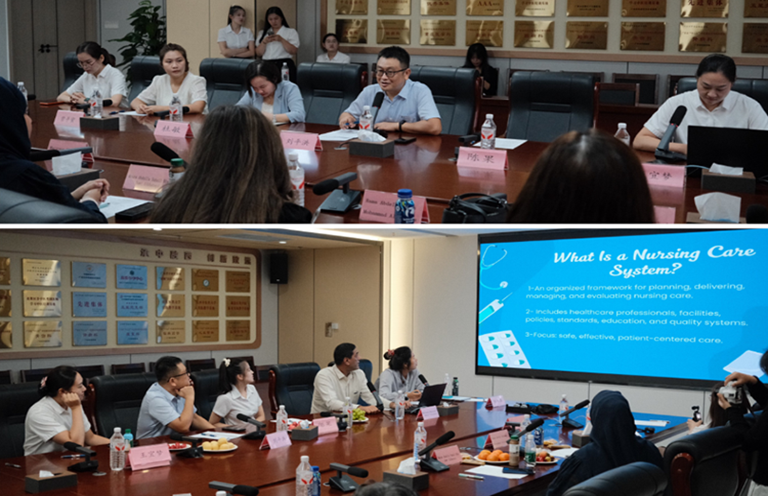
On the morning of September 21, Nursing Department Director Du Min welcomed the delegation and introduced the hospital’s nursing team building, continuing education, and discipline development. Head Nurse Wang Yimeng presented the burn and wound repair nursing structure and standardized wound treatment principles. Director Liu Pinghong used cases, images, and videos to explain regenerative medical technology in acute and chronic wounds, highlighting its safety and efficacy for patients of all ages. Specialist nurse Zeng Zimi discussed nurses’ evolving roles and standardized wound assessment. TCM nurse Chen Guo shared how regenerative technology combined with TCM nursing shortens healing, improves repair quality, and boosts patient satisfaction. Finally, Marzouq Mansour Awwad Taharweh, Director of Wound Care Specialist Nursing at UAE’s Sharjah University Hospital, presented its nursing team model and staff responsibilities, offering useful experience for mutual learning.
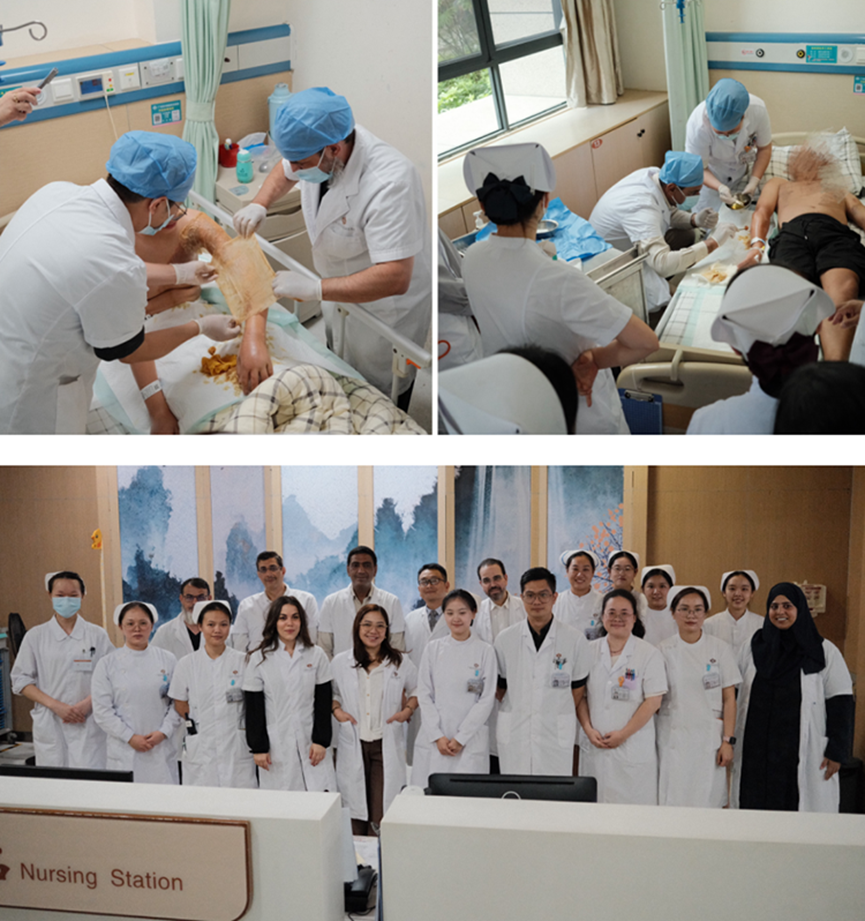
That afternoon, the delegation visited the Department of Burn and Wound Repair for observation and hands-on learning. They observed standardized dressing changes using regenerative medical technology for burn, scald, and traumatic wounds, and practiced under staff guidance to master the standards and understand their importance. They also discussed infected wound management, dosage control, and the best timing for combining the technology with surgery, creating a lively academic atmosphere.
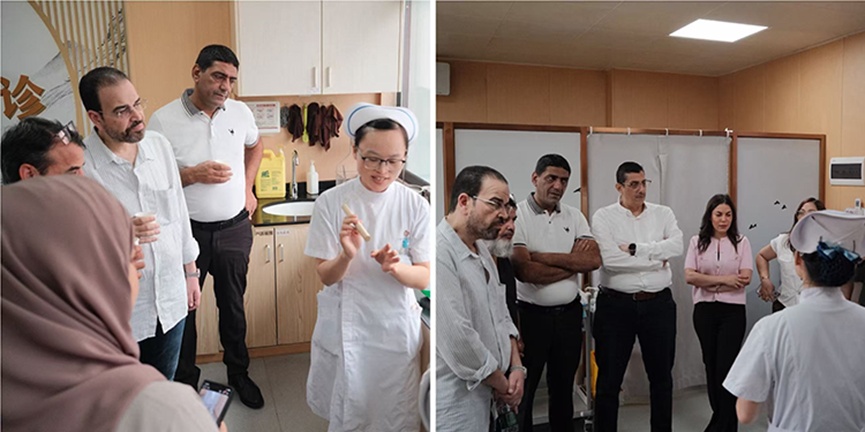
On the morning of September 22, the delegation visited the Traditional Chinese Medicine Nursing Clinic to learn about the hospital’s integrated traditional Chinese and Western medicine nursing model. They learned about TCM nursing projects such as fire dragon cupping, red furnace tendon-pulling, and auricular scraping, and understood how these therapies help regulate systemic diseases while supporting wound healing. They also personally experienced these services and learned how TCM nursing combined with regenerative medical technology helps manage wound pain, improve local blood circulation, and accelerate wound repair. The delegation highly recognized the hospital’s innovative wound diagnosis and treatment model.
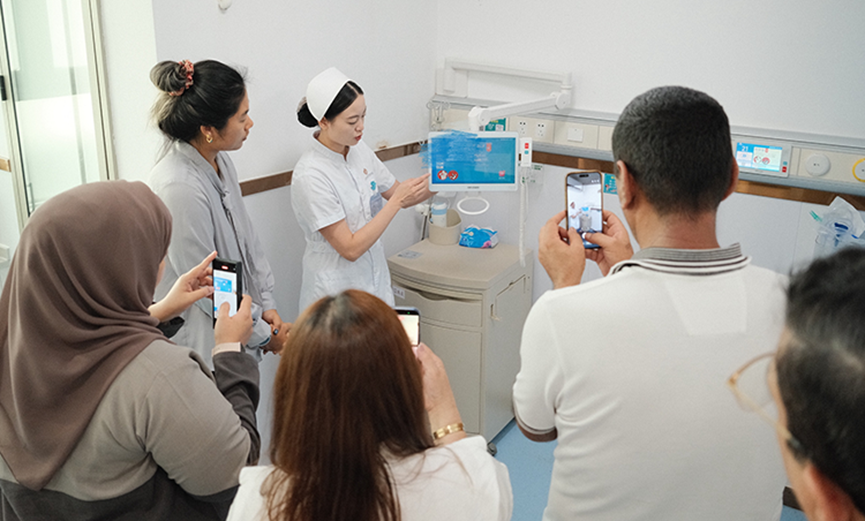
In the afternoon of the same day, the delegation went to the Department of Nephrology to visit the smart ward. Under the detailed explanation of the department’s nursing staff, the delegation comprehensively understood the functional advantages of the smart ward system, clearly grasped the important role of this digital system in streamlining nursing work steps, optimizing clinical nursing processes, improving nursing work efficiency, and reducing the workload of medical and nursing staff, and gave it high praise.
The two-day academic exchange activity came to a successful conclusion. This activity further consolidated the foundation of cooperation between China and the Arab side in the nursing field, fully highlighted the safety advantages and practical value of regenerative medical technology in wound repair diagnosis and treatment, and also built a high-quality bridge for the international promotion of this technology and the overseas dissemination of the integrated traditional Chinese and Western medicine nursing model, helping wound care achieve high-quality development in the direction of standardization, refinement, and internationalization.